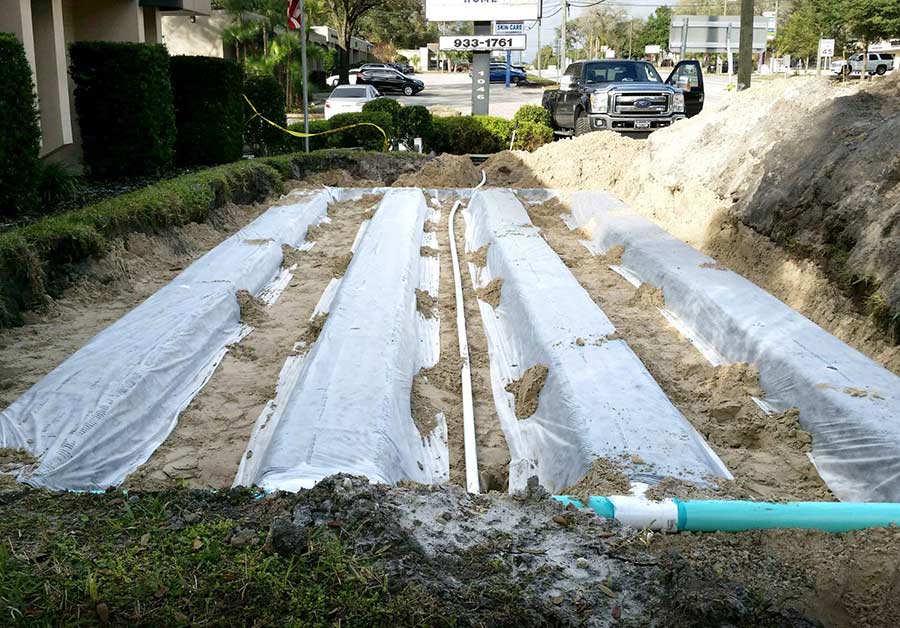
A septic system consists of a septic tank and drain field, and in some cases a pump tank for those who cannot gravity feed to the drain field like here in many parts of Hillsborough County. Septic systems can last for decades, if given the proper maintenance along with some helpful tips and knowledge that all homeowners should know.
Contact Info:
Name: Billy Fowler
Email: [email protected]
Organization: ASAP Advanced Septic & Drainage, Inc.
Address: 5011 E Busch Blvd, Tampa, FL 33617
Phone: (813) 986-6070
Washing Machine Lint Traps

Septic tank systems become clogged with roots in the leach lines, leach field, drain field or seepage field, causing backup of wastewater into the house. The inexpensive fix is to use copper sulfate through an installed cleanout or septic field pump. Septic tank systems do not last forever and replacing one is a very expensive proposition. If your house is connected to the city sewer system, then you do not have a septic tank. A septic tank can be described as your very own little sewage treatment plant. There are three basic elements of a septic system: Eventually leach fields become clogged because the roots from trees and other vegetation are attracted to the nutrient-rich effluent. The roots grow through the pores intended to drain the liquid, seepage gradually slows or stops. If sufficient pressure cannot be released through the pores of the leach field, the entire septic system cannot accept any more waste water and it backs up in the house, usually at a low point such as a shower or tub drain. If it gets that bad, you may have to replace the entire leach field. In many localities, that will require a building permit and meeting current building codes, which means replacing the entire septic system, which is expensive, etc. Since this is obviously something to avoid, you can often extend the life of the old system by taking action when sewage flow has slowed, but not completely stopped. Copper sulfate kills roots. If it can be placed into the system so that it will flow through the leach field, the roots will die (but not the plants) and waste water will begin to flow more freely again after a few weeks. In many systems, this isn’t as easy as it sounds, because copper sulfate is so heavy that it will settle to the bottom of the septic tank unless inserted into the leach line leading from the tank. If you have a cleanout or other access there, you’re all set, but many residential systems do not. I prefer the crystal form over the powder because it's easier to handle, cheaper and dissolves more slowly, . If necessary, it is not very expensive to have a cleanout installed in the leach line expressly for the purpose of adding copper sulfate periodically. If that still doesn’t quite work, or if you want to be sure the stuff is going to flow more quickly, you can pump it through the leach field. It is possible to install a pump on the leach line cleanout between the septic tank and the leach field. It can be buried below ground level or installed above ground and concealed with landscape bushes. The pump turns on and off automatically to maintain a slight pressure on the waste water, pushing it through the pores of the seepage field. Adding copper sulfate at intervals through a cleanout at this point is effective to drive the chemical towards the offending roots. Killing the roots may extend the life of the septic system a few years, but it will ultimately need to be replaced with a completely modern one—unless you can successfully lobby for a neighborhood hook-up, of course.Septic tank systems
A clogged leach field
Kill roots with copper sulfate
Install a leach line cleanout
Typically, a 3 bedroom home with 2250 sq ft of living or less has a 900 gallon septic tank and can be used here in Hillsborough County . The septic tank receives all the waste water from a home. This includes showers, toilets, washing machine, dishwasher and sinks. According to the American water works association, the average person uses about 70 gallons per day on average. The family of 4 would add up to 280 gallons a day. So, just imagine how fast your septic tank will fill up, and how much water must flow through the tank to make it out to the drain field.
What Is Septic Tank Cleaning?

Septic tanks are a great solution for remote or urban property owners who either cannot or do not want to be part of a municipal sewage system. A septic system is connected directly to the pipes of the residence or business and serves as an immediate filter and containment unit for water-bound domestic waste. There are certain risks related to the installation and maintenance of a septic tank; such risks have resulted in rules that need to be followed to protect the environment and property especially with the regular removal of the contents of the tank by a vacuum truck. Frequency Depending on the size of the unit and the household, a tank must be emptied every three to five years. This is necessary not only because of space limitations but also because the tank needs to be inspected with some regularity to check for cracks, leaks and blockages. Other reasons are as follows: Septic tanks serve a very useful purpose for many households. As long as properly maintained by regular pumping, cleaning and inspections, they should correctly function under all conditions and for a long service life. Hopefully this information will be helpful in knowing how a septic tank is cleaned!
Through consistent septic tank pumping, and by following these important tips can help avoid costly backup and also increase the life of your system.
Clean Your Septic Tank Before the Party!

Septic tanks usually handle waste liquid and scum daily. If a tank is filled to capacity, scum and effluent have no place to go but to back up to into toilets, sinks, and drains. To prevent this embarrassing and disgusting scenario from happening, septic tanks must be cleaned out at regularly scheduled intervals. This process is not something that can be done alone but needs a specialized device to safely remove the sludge, scum and effluent from the tank and carried to a disposal site. An additional thought is that it is a wise idea to clean a septic tank prior to a big gathering or party to avoid the overloading of sewage water into the septic system that can occur during periods of large usage.ReasonsIt is an unfortunate occurrence for a system to back up during large gatherings such as Christmas, Thanksgiving, weddings, summer barbecues or other such parties. The reason this occurs is that the tank is having trouble due to over usage, a problem that does not usually happen during normal use. The increased waste water entering the tank can't freely flow into the drain field. This can cause a blockage in the sewer line which in turn can result in the effluent backing up into the house. Oftentimes, it is not the large amount of waste water but something foreign that has been flushed down the drain that causes the obstruction. Although this could possible be handled by using a plunger to remove the clog, frequently the main problem is in the septic system itself.Using vacuum trucks, elimination of septic waste is very simple, although this should always be accomplished by a professional that is equipped to handle the job. Vacuum trucks are used to remove the effluent, scum and sludge at scheduled intervals as well as prior to big parties. It is indeed a good idea to pump the tank before a party to avoid clogging the sewer line caused by over usage; however, the best practice is to establish and maintain a regular pumping schedule to extend the life of the system. So have that party and have no sewage system problems to ruin the event!
- Septic System Cleaning Service Hillsborough County
- Septic Drain Field Repair Apollo Beach
- Sewage Pumping Company Boyette
- Sewage Pumping Company Brandon
- Septic Drain Field Contractor Citrus Park
- Septic Tank Installation Dover
- Septic Tank Installation East Tampa
- Septic Tank Draining Keystone
- Septic Tank Inspection Service Lutz
- Cost Of Septic Tank Pumping Mango
- Sewage Tank Cleaning Nort Tampa
- Drain Field Plant City
- Septic Tank Draining Riverview
- Drain Field Repair Service Ruskin
- Sewage Pumping Company Sun City Center
- Sewer Repair Tampa
- Septic Drain Field Contractor Tampa Bay
- Cleaning Septic Tank Company Temple Terrace
- Septic Tank Draining Thonotosassa
- Aerobic Septic Company Town N Country
- Aerobic Septic Contractor Valrico
- Septic Pumping Contractor Westchase