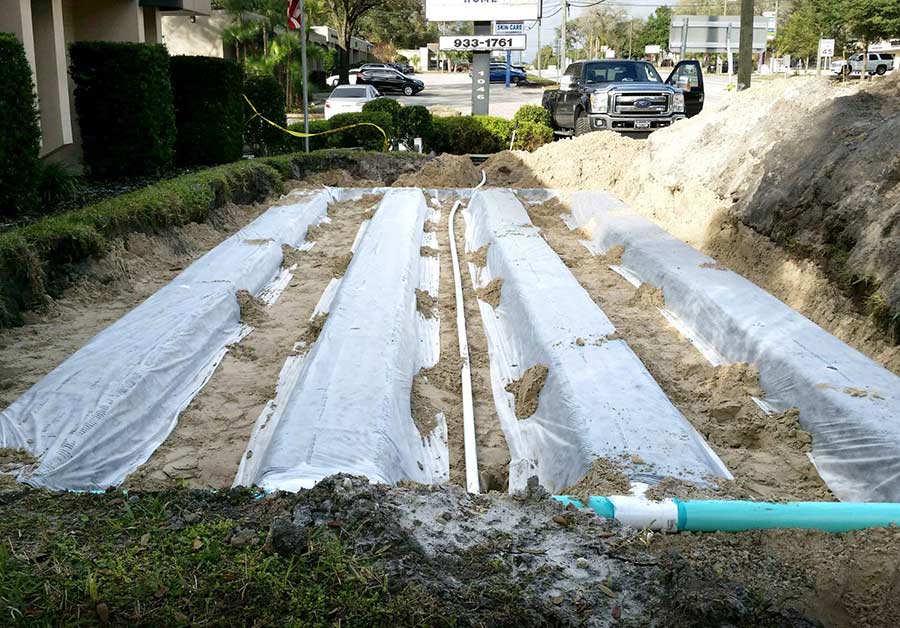
A septic system consists of a septic tank and drain field, and in some cases a pump tank for those who cannot gravity feed to the drain field like here in many parts of Hillsborough County. Septic systems can last for decades, if given the proper maintenance along with some helpful tips and knowledge that all homeowners should know.
Contact Info:
Name: Billy Fowler
Email: [email protected]
Organization: ASAP Advanced Septic & Drainage, Inc.
Address: 5011 E Busch Blvd, Tampa, FL 33617
Phone: (813) 986-6070
How Is a Septic Tank Cleaned?

A septic system works as a mini sewage treatment facility mostly built on homes located on areas wherein access to local sewage system is quite difficult. While most are built to last a lifetime, improper septic tank maintenance can lead to damage and early malfunction of the septic system. Thus important points must be remembered in order to keep an effective septic tank system. The following are the most important points in proper care. Controlling water input Water input may seem to have no effect in everyday use, however too much water going down the tank may cause major problems. Overloading the tank with water may slow down the anaerobic digestion process in the system that makes effective. Overflows on the drain field or seepage field may happen that may include floating scum other than the liquids inside the tank that may further cause health and environmental problems. Periodic septic tank inspection While this may only be necessary every several years,it is important nevertheless to avoid abrupt problems occurring to the system. Depending on the capacity of the tank, periodic maintenance procedures must include inspection of the overall septic tank system. It should include checking levels of accumulated solids, floating scum and the water being discharge by the system to the drain field. Understanding the above items and applying them in everyday use may lead to more effective septic tank. Proper septic tank care may not seem important to most home owners since its functions are well hidden in the household, however if willfully neglected may lead the owner to suffer costly repairs, as well as health and environmental issues.
Typically, a 3 bedroom home with 2250 sq ft of living or less has a 900 gallon septic tank and can be used here in Hillsborough County . The septic tank receives all the waste water from a home. This includes showers, toilets, washing machine, dishwasher and sinks. According to the American water works association, the average person uses about 70 gallons per day on average. The family of 4 would add up to 280 gallons a day. So, just imagine how fast your septic tank will fill up, and how much water must flow through the tank to make it out to the drain field.
Aerobic treatment system

An aerobic treatment system or ATS, often called (incorrectly) an aerobic septic system, is a small scale sewage treatment system similar to a septic tank system, but which uses an aerobic process for digestion rather than just the anaerobic process used in septic systems. These systems are commonly found in rural areas where public sewers are not available, and may be used for a single residence or for a small group of homes. Unlike the traditional septic system, the aerobic treatment system produces a high quality secondary effluent, which can be sterilized and used for surface irrigation. This allows much greater flexibility in the placement of the leach field, as well as cutting the required size of the leach field by as much as half.[1] The ATS process generally consists of the following phases:[2] The disinfecting stage is optional, and is used where a sterile effluent is required, such as cases where the effluent is distributed above ground. The disinfectant typically used is tablets of calcium hypochlorite, which are specially made for waste treatment systems.[3] The tablets are intended to break down quickly in sunlight. Stabilized forms of chlorine persist after the effluent is dispersed, and can kill plants in the leach field. Since the ATS contains a living ecosystem of microbes to digest the waste products in the water, excessive amounts of items such as bleach or antibiotics can damage the ATS environment and reduce treatment effectiveness. Non-digestible items should also be avoided, as they will build up in the system and require more frequent sludge removal.[4] Small scale aerobic systems generally use one of two designs, fixed-film systems, or continuous flow, suspended growth aerobic systems (CFSGAS). The pre-treatment and effluent handling are similar for both types of systems, and the difference lies in the aeration stage.[1] Fixed film systems use a porous medium which provides a bed to support the biomass film that digests the waste material in the wastewater. Designs for fixed film systems vary widely, but fall into two basic categories (though some systems may combine both methods). The first is a system where the media is moved relative to the wastewater, alternately immersing the film and exposing it to air, while the second uses a stationary media, and varies the wastewater flow so the film is alternately submerged and exposed to air. In both cases, the biomass must be exposed to both wastewater and air for the aerobic digestion to occur. The film itself may be made of any suitable porous material, such as formed plastic or peat moss. Simple systems use stationary media, and rely on intermittent, gravity driven wastewater flow to provide periodic exposure to air and wastewater. A common moving media system is the rotating biological contactor (RBC), which uses disks rotating slowly on a horizontal shaft. Approximately 40 percent of the disks are submerged at any given time, and the shaft rotates at a rate of one or two revolutions per minute.[1] CFSGAS systems, as the name implies, are designed to handle continuous flow, and do not provide a bed for a bacterial film, relying rather on bacteria suspended in the wastewater. The suspension and aeration are typically provided by an air pump, which pumps air through the aeration chamber, providing a constant stirring of the wastewater in addition to the oxygenation. A medium to promote fixed film bacterial growth may be added to some systems designed to handle higher than normal levels of biomass in the wastewater.[1] Another increasingly common use of aerobic treatment is for the remediation of failing or failed anaerobic septic systems, by retrofitting an existing system with an aerobic feature. This class of product, known as aerobic remediation, is designed to remediate biologically failed and failing anaerobic distribution systems by significantly reducing the biochemical oxygen demand (BOD5) and total suspended solids (TSS) of the effluent. The reduction of the BOD5 and TSS reverses the developed bio-mat. Further, effluent with high dissolved oxygen and aerobic bacteria flow to the distribution component and digest the bio-mat.Doing so on single tank systems where solids do not have anywhere to settle, or there is no a clarifying area can do damage to the field lines as the solid matter is stirred up in the tank. Composting toilets are designed to treat only toilet waste, rather than general residential waste water, and are typically used with water-free toilets rather than the flush toilets associated with the above types of aerobic treatment systems. These systems treat the waste as a moist solid, rather than in liquid suspension, and therefore separate urine from feces during treatment to maintain the correct moisture content in the system. An example of a composting toilet is the clivus multrum (Latin for 'inclined chamber'), which consists of an inclined chamber that separates urine and feces and a fan to provide positive ventilation and prevent odors from escaping through the toilet. Within the chamber, the urine and feces are independently broken down not only by aerobic bacteria, but also by fungi, arthropods, and earthworms. Treatment times are very long, with a minimum time between removals of solid waste of a year; during treatment the volume of the solid waste is decreased by 90 percent, with most being converted into water vapor and carbon dioxide. Pathogens are eliminated from the waste by the long durations in inhospitable conditions in the treatment chamber.[5] The aeration stage and the disinfecting stage are the primary differences from a traditional septic system; in fact, an aerobic treatment system can be used as a secondary treatment for septic tank effluent.[1] These stages increase the initial cost of the aerobic system, and also the maintenance requirements over the passive septic system. Unlike many other biofilters, aerobic treatment systems require a constant supply of electricity to drive the air pump increasing overall system costs. The disinfectant tablets must be periodically replaced, as well as the electrical components (air compressor) and mechanical components (air diffusers). On the positive side, an aerobic system produces a higher quality effluent than a septic tank, and thus the leach field can be smaller than that of a conventional septic system, and the output can be discharged in areas too environmentally sensitive for septic system output. Some aerobic systems recycle the effluent through a sprinkler system, using it to water the lawn where regulations approve. Since the effluent from an ATS is often discharged onto the surface of the leach field, the quality is very important. A typical ATS will, when operating correctly, produce an effluent with less than 30 mg/liter BOD5, 25 mg/L TSS, and 10,000 cfu/mL fecal coliform bacteria. This is clean enough that it cannot support a biomat or "slime" layer like a septic tank.[6] ATS effluent is relatively odorless; a properly operating system will produce effluent that smells musty, but not like sewage. Aerobic treatment is so effective at reducing odors, that it is the preferred method for reducing odor from manure produced by farms.[7][8][9]
Through consistent septic tank pumping, and by following these important tips can help avoid costly backup and also increase the life of your system.
Tips for Maintaining Your Septic Tank

For every homeowner, maintaining a septic system that includes the septic tank is a very important task that will ensure the system stays running efficiently for many years. A home's septic tank is dependent on natural bacteria and enzymes to break down and digest waste and keep everything flowing through the system. Without the bacteria additives and enzymes, waste would build up in the tank and eventually create a blockage. The result can be septic system back up in the plumbing system which can spill in the basement and even the drain field. This would result in a very costly repair bill. In order to keep the bacterial from being killed, it is important not to put chemicals in the plumbing system that can kill the bacteria. One item that people use and pour into the plumbing system is vinegar. Many harsh chemical cleaners can harm a septic system and some can kill the bacteria additives and enzymes in the septic tank. Using vinegar is one way to avoid using harsh chemicals and the bacteria will not be killed so you do not have to worry about damaging your septic system. Because vinegar is a pungent acid, you should wear protective gloves, especially if you have any scratches. As well, make sure you do not splash any vinegar in eyes. Most experts recommend using vinegar in septic system maintenance because it will not ruin the septic system.
- Septic System Cleaning Service Hillsborough County
- Septic Drain Field Repair Apollo Beach
- Sewage Pumping Company Boyette
- Sewage Pumping Company Brandon
- Septic Drain Field Contractor Citrus Park
- Septic Tank Installation Dover
- Septic Tank Installation East Tampa
- Septic Tank Draining Keystone
- Septic Tank Inspection Service Lutz
- Cost Of Septic Tank Pumping Mango
- Sewage Tank Cleaning Nort Tampa
- Drain Field Plant City
- Septic Tank Draining Riverview
- Drain Field Repair Service Ruskin
- Sewage Pumping Company Sun City Center
- Sewer Repair Tampa
- Septic Drain Field Contractor Tampa Bay
- Cleaning Septic Tank Company Temple Terrace
- Septic Tank Draining Thonotosassa
- Aerobic Septic Company Town N Country
- Aerobic Septic Contractor Valrico
- Septic Pumping Contractor Westchase