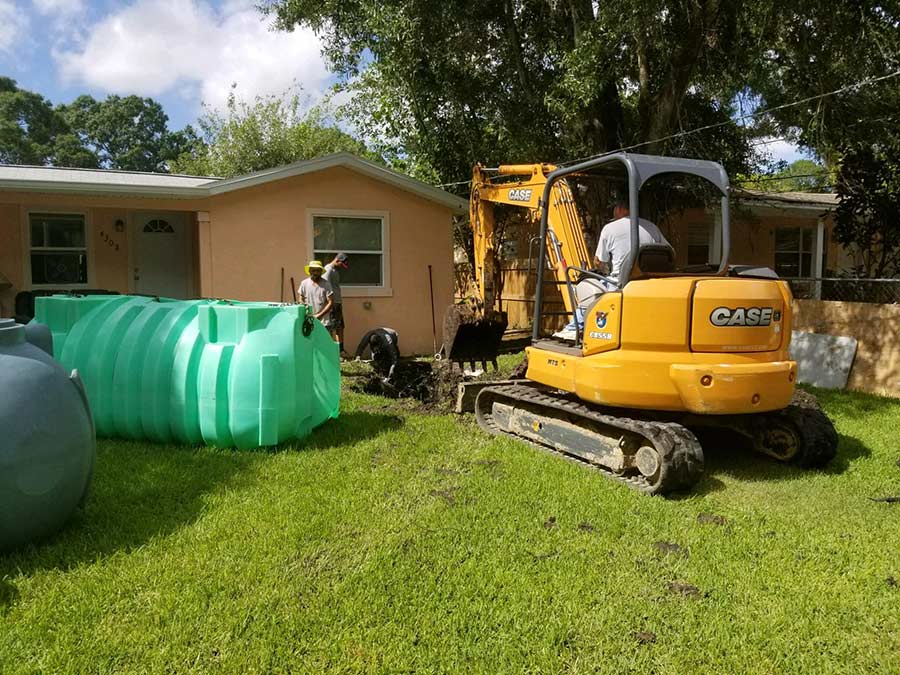
A septic system consists of a septic tank and drain field, and in some cases a pump tank for those who cannot gravity feed to the drain field like here in many parts of Polk County. Septic systems can last for decades, if given the proper maintenance along with some helpful tips and knowledge that all homeowners should know.
Contact Info:
Name: Billy Fowler
Email: [email protected]
Organization: ASAP Advanced Septic & Drainage, Inc.
Address: 5011 E Busch Blvd, Tampa, FL 33617
Phone: (813) 986-6070
Septic Tank Installation, Repair and Replacement

Septic tanks usually handle waste liquid and scum daily. If a tank is filled to capacity, scum and effluent have no place to go but to back up to into toilets, sinks, and drains. To prevent this embarrassing and disgusting scenario from happening, septic tanks must be cleaned out at regularly scheduled intervals. This process is not something that can be done alone but needs a specialized device to safely remove the sludge, scum and effluent from the tank and carried to a disposal site. An additional thought is that it is a wise idea to clean a septic tank prior to a big gathering or party to avoid the overloading of sewage water into the septic system that can occur during periods of large usage.ReasonsIt is an unfortunate occurrence for a system to back up during large gatherings such as Christmas, Thanksgiving, weddings, summer barbecues or other such parties. The reason this occurs is that the tank is having trouble due to over usage, a problem that does not usually happen during normal use. The increased waste water entering the tank can't freely flow into the drain field. This can cause a blockage in the sewer line which in turn can result in the effluent backing up into the house. Oftentimes, it is not the large amount of waste water but something foreign that has been flushed down the drain that causes the obstruction. Although this could possible be handled by using a plunger to remove the clog, frequently the main problem is in the septic system itself.Using vacuum trucks, elimination of septic waste is very simple, although this should always be accomplished by a professional that is equipped to handle the job. Vacuum trucks are used to remove the effluent, scum and sludge at scheduled intervals as well as prior to big parties. It is indeed a good idea to pump the tank before a party to avoid clogging the sewer line caused by over usage; however, the best practice is to establish and maintain a regular pumping schedule to extend the life of the system. So have that party and have no sewage system problems to ruin the event!
Typically, a 3 bedroom home with 2250 sq ft of living or less has a 900 gallon septic tank and can be used here in Polk County . The septic tank receives all the waste water from a home. This includes showers, toilets, washing machine, dishwasher and sinks. According to the American water works association, the average person uses about 70 gallons per day on average. The family of 4 would add up to 280 gallons a day. So, just imagine how fast your septic tank will fill up, and how much water must flow through the tank to make it out to the drain field.
Septic Tanks - Ensuring Water Quality

Septic system problems can occur and worsen extremely quickly. Learn how to identify issues with septic drain fields so that you can minimize damage and get the necessary repairs as soon as possible. When you live in an area that is not connected to a municipal sewer system, your septic tank and system are an essential part of your day-to-day life. As such, it's vital to keep them in good working order and to deal with any issues that come up as soon as possible. Septic system drain fields, in particular, often experience issues. Find out what problems to keep an eye out for, and how your local septic repair and service firm can resolve them so that your septic system stays in top shape. Drain fields are the part of your septic system where organic liquid waste drains out of the septic tank and is treated. After solid waste settles to the bottom of the septic tank, the remaining wastewater passes into perforated pipes. These pipes are covered by a layer of soil and disperse the wastewater over a large area. The wastewater then travels through a layer of gravel, then through a layer of soil. Here, bacteria in the soil filter the wastewater so that it is neutral before it reaches a groundwater level. Your drain field is the unseen hero of your septic system. From root removal to tank clean out, make sure you take care of it so that it will stay healthy and intact for years to come.
Through consistent septic tank pumping, and by following these important tips can help avoid costly backup and also increase the life of your system.
Is Vinegar Safe for Septic Tanks?

Understanding septic systems capabilities and limits is needed to ensure water quality. A septic system is a type of On-Site Sewage Facility and is a self-contained, underground waste-water treatment system. By using natural processes to treat the waste-water on-site, septic systems do not require the installation of miles of sewer lines, making them less disruptive to the environment. A septic system consists of a septic tank, a distribution system and a soil absorption system, also called a drain field. The septic tank is a watertight box, sometimes made out of concrete or fiberglass, with an inlet and outlet pipe. The septic tank treats the waste-water naturally by holding it in the tank long enough for solids and liquids to separate. The waste-water forms three layers inside the tank. Solids lighter than water float to the top forming a layer of scum.Solids heavier than water settle at the bottom of the tank forming a layer of sludge. This leaves a middle layer of partially clarified waste-water. The layers of sludge and scum remain in the septic tank where bacteria found naturally in the waste-water work to break the solids down. The sludge and scum that cannot be broken down are retained in the tank until the tank is pumped. The layer of liquid flows from the septic tank to the drain field. A drain a series of trenches lined with gravel or sand and below the ground. The drain field treats the waste-water by allowing it to slowly trickle from the pipes out into the gravel and down through the soil. The remaining impurities are trapped and disposed of in the soil. The excess water is eliminated through percolation into the soil, and eventually returning to the ground water, through evaporation, and by uptake through plants and transpiration.The Center for Watershed Protection notes that septic systems can be effective methods of water treatment, however failures are common in many areas. Even properly functioning septic systems can leak and are not designed to effectively deal with most of the phosphorus and nitrogen load found in the water it treats. Pathogenic fecal bacteria are also a concern. The primary concern for a municipality is proper maintenance of septic systems, and in some cases the total load of partially treated pollutants that can impact local drinking water and wildlife. A solid understanding of septic systems capabilities and limits, and a good government plan is needed to ensure water quality.
- Septic Tank Draining Service Polk County
- Tank Cleaning Service Auburndale
- Drain Field Installation Company Bartow
- Drain Field Contractor Bowling Green
- Septic Tank Cleaning Eagle Lake
- Cost Of Septic Tank Pumping Fort Meade
- Septic System Installation Frost Proof
- Sewage Pumping Company Haines City
- Sewage Tank Pumping Lake Alfred
- Drain Field Contractor Lake Wales
- Sewer Cleaning Service Lakeland
- Septic System Cleaning Service Mulberry
- Septic Tank Service Winter Haven